Best Dermatologist Treatments for Sun Tanning
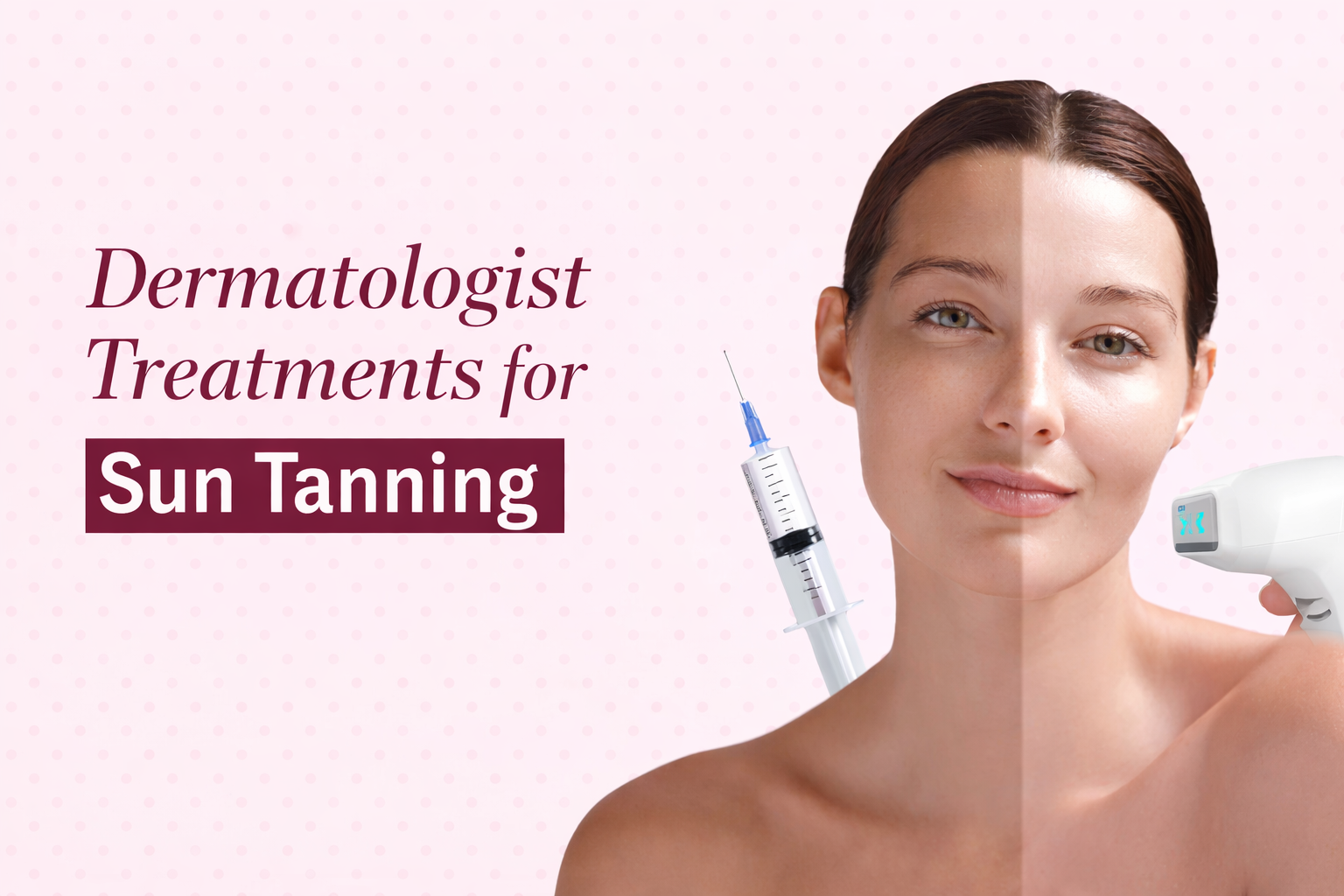
With Delhi’s rising temperature and harsh UV exposure, sun tanning has become one of the most common skin concerns. Whether it’s daily commuting, outdoor work, or even short sun exposure, your skin can quickly lose its natural tone and develop uneven pigmentation. While home remedies may offer temporary relief, dermatologist-backed treatments provide faster, safer, and long-lasting results.
If you’re looking for effective ways to deal with tanning, this guide will help you understand professional options and how to choose the right solution for your skin.
Why Does Sun Tanning Happen?
Tanning occurs when the skin tries to shield itself from the harmful UV rays that come from the sun.
In broader terms, when the skin is exposed to the sun, harmful UV rays penetrate deep inside the skin. There are two types of rays emitted from the sun: UVA rays that cause tanning and skin aging, and UVB rays that lead to sunburn and long-term damage. To prevent such harms, the skin produces melanin. This pigment helps in:
- Absorbing the UV rays.
- Shield the deep layer of skin.
- Lessen the risk of DNA damage in the skin cells.
But this response against the scorching heat leads to the increased production of melanin, which makes the skin darker, and this is what we call it as “Tan”.
Popular Dermatologist Treatments for Tan Removal
Doing the basic home care is not enough when the tanning becomes stubborn to disappear. Here are some of the useful tan removal treatments that we provide at Skinroots Clinic
1. Chemical Peels
One of the best sun tan removal treatments is chemical peels, where the chemical solution made of glycolic, salicylic, or lactic acid is applied on the face to remove the damage cell and tan areas. This helps in:
- Reduce the excess melanin.
- Making the skin bright.
- Enhance skin texture and tone.
- Lessen the pigmentation
Depending on the intensity of tan, you may require multiple sessions.
2. Laser Skin Brightening
One of the advanced skin tan removal treatments is the laser skin brightening, where the focused light energy targets the melanin deposit to break it down effectively. This procedure leads to the:
- Fast and noticeable results.
- Has minimal downtime.
- Best for stubborn tan.
If you have uneven tanning or long-term sun damage, this treatment can suit you best.
3. Microdermabrasion
In microdermabrasion, a special diamond tip device is used to remove the dead and tanned cells from the top layer of the skin. This gentle and non-surgical procedure:
- Gives instant skin glow
- Enhance blood circulation
- Prevent dead skin
- Boost skin renewal
For mild to modern tanning, microdermabrasion is a great option.
4. Medi-Facials (HydraFacial & Brightening Facials)
Medifacial is the dermatologist led treatments that deeply cleans the skin along with the infusion of brightening and hydrating serums. Unlike the regular salon facial, the hydrafacial and brightening facial contribute to:
- Clean the skin deeply.
- Minimize the dullness and tan.
- Clear the pores that are clogged
- Hydrates and refreshes the skin
- Improve the overall glow.
If you don’t like the aggressive procedure but want the quick glow, these facials can be ideal for you.
5. De-Tan Therapies
At Skinroots, we also provide the De tan therapy, where the pack or solution is used to remove the tan and dead skin. It shows the gradual but effective results.
- Reduce the pigmentation.
- Remove dull and dead skin.
- Prioritize uneven skin tone.
Post-Treatment Care: What You Must Follow
To protect the skin and maintain the results for a longer time, post-treatment care plays a critical role.
- Use sunscreen of SPF 30 or SPF 50 daily.
- During the peak sun hours, refrain from direct sunlight.
- Drink as much water as you can.
- Follow all your dermatologist's skincare routine.
Even after skin tan removal treatment, these skincare tips are important to follow consistently for better results.
Can Sunscreen Prevent Tanning Completely?
Even the best sunscreen for tanning cannot block 100% of UV rays. Sunscreens of SPF 30 provide only 97% of shield from the sun, whereas it is 98% proetection in SPF 50.
But applying the sunscreen daily can significantly reduce the damage and tanning. Always choose:
- Broad-spectrum protection that is both UVA and UVB.
- SPF 30 or higher, not less than that.
- Sweat and water-resistant.
In Delhi’s extreme weather, don’t forget to reapply sunscreen every 2-3 hours.
Choosing the Right Dermatologist
Skin is the most sensitive organ of the body. So when it comes to such a delicate part of the body, choosing the right dermatologist for tan removal treatment plays a critical role.
At Skinroots Clinic, our best dermatologist in Delhi
- First, analyze your skin condition.
- Offer a customized treatment plan.
- Uses modern technology.
- Refrain from over-treatment.
Final Thoughts
Sun tanning is not just a cosmetic issue; it’s a sign of underlying skin damage. While home remedies may help slightly, professional treatments offer faster, safer, and more reliable results.
If you’re struggling with stubborn tan or uneven skin tone, visiting a skin specialist in Delhi is the smartest step. Clinics like Skinroots focus on personalized care, ensuring your skin gets exactly what it needs.
Invest in your skin today, because healthy skin isn’t just about looking good; it’s about long-term care and protection.
FAQS
1. How long does tan removal usually take?
There isn’t one fixed timeline. Sometimes you start noticing a difference early, but in other cases it takes a few sittings. It really comes down to how much tanning there is.
2. Is it safe to go for these treatments?
If it’s done by a proper dermatologist, it’s generally fine. They usually look at your skin first and then decide what’s suitable, so it’s not random.
3. What helps when the tan just doesn’t go away?
When it’s been there for a while, basic things don’t do much. That’s when doctors suggest slightly stronger options like peels or similar treatments.
4. Can the tan come back later?
Yes, it can happen. If you’re out in the sun a lot and not taking care, the skin can tan again over time.
5. Does sunscreen completely stop tanning?
Not fully. It reduces the impact, but it’s not like a full barrier. You still need to be a bit careful with sun exposure.
Have a skin or hair concern?
Reading about a concern is a useful first step. Speak with the Skinroots team to discuss your concern and available treatment options.
Book a ConsultationRelated articles