Complete Guide to Melasma Treatment: Causes, Options & Results
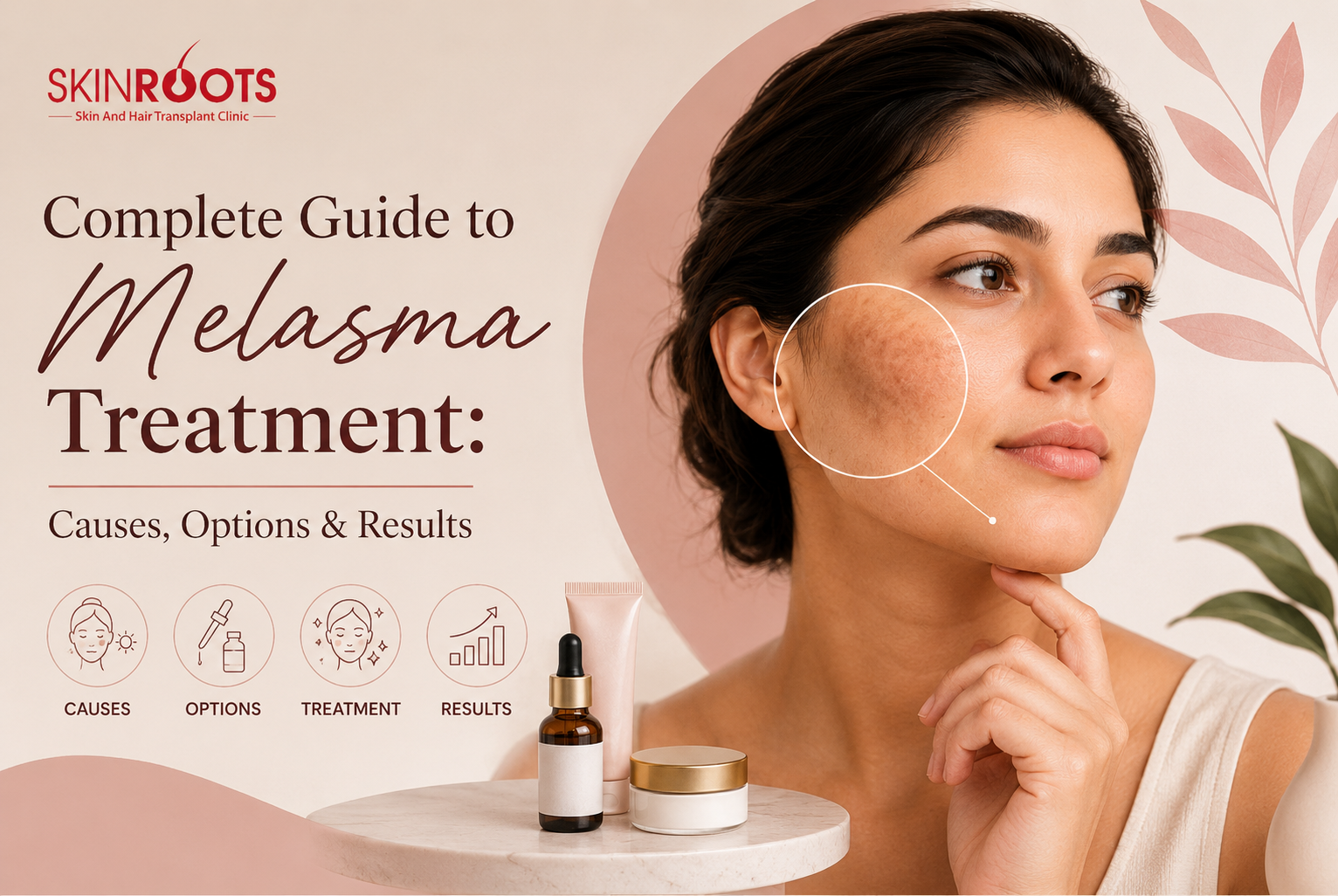
In Indian skin types, melasma is the most common skin pigmentation concern. While it is not harmful and appears as brown, grey, or patchy pigmentation, it can affect confidence by making the skin appear uneven and dull. On a positive side, there are advanced melasma treatments that can effectively reduce the pigmentation and bring an even skin tone.
If you are also looking for the Melasma Removal in Delhi, understanding the causes, treatment options and what results it produces is important. That is why in this blog, we have bought you a whole guide on Melasma pigmentation treatment so that you can get better insights and take an informed decision for your skin.
What is Melasma?
Melasma is a common skin condition that leads to the dark brown, gray brown, or patchy pigmentation on the skin, mainly on the face. It is caused when the skin produces excess melanin, a natural pigment that brings colour to the hair, skin and eyes.
Both men and women can experience melasma, though this condition is worse in women, especially during hormonal changes and pregnancy. Unlike temporary tanning or post-acne marks that can fade with time, melasma stays for a longer period and thus requires professional treatment.
Common Causes of Melasma
There are several factors that lead to melasma. Some of them are mentioned here:
1. Sun Exposure
One of the biggest triggers of melasma is sun exposure, that enhance the melanin production, making pigmentation darker and more noticeable.
2. Hormonal Changes
Hormonal fluctuations in the body can also lead to melasma. Such an imbalance in hormones are usually seen during pregnancy, thyroid issues, and when taking birth control pills.
3. Genetics
If melasma runs in the family, then it has a higher chance of passing down in each generation.
4. Heat and Pollution
Excessive exposure to heat, pollution and other environmental damages increases the melanin production that makes the pigmentation darker and more persistent.
5. Incorrect Skincare Products
Applying harsh products or steroid creams irritates the skin and worsens the pigmentation.
How is Melasma Diagnosed?
At Skinroots clinic, we first analyze the depth and type of pigmentation and then evaluate the skin deeply before recommending the customized treatment plan. Such an assessment ensures better and long-lasting results.
If you are relying on self-treatment for melasma, stop doing that and consult the Best Melasma Specialist in Delhi to prevent the condition from getting worse.
Effective Treatment Options for Melasma
There are multiple advanced treatments that reduce pigmentation and enhance the overall skin tone. Some of the effective methods are:
1. Medical Skincare
In this, the dermatologist recommends some creams, antioxidants, and retinoids. These help in controlling the melanin production that ultimately reduces the pigmentation over time.
2. Chemical Peels
Chemical peel exfoliates the damaged outer layer of the skin and promotes fresh skin regeneration. With the multiple sessions, this procedure can boost the skin texture and brightness.
3. Laser Toning
Another advanced treatment of melasma is laser toning that targets the surplus pigment area while keeping the surrounding tissue safe. This gives gradual and natural-looking results.
4. Medi-Facials and Skin Brightening Treatments
Unlike the salon facials, professional medi facials calm the inflammation, hydrate the skin and improve overall skin tone. Medi facials are often blended with other medical therapies for enhanced results.
5. Sun Protection
Melasma treatment without the proper sunscreen is pointless. To prevent recurrence, always use a broad-spectrum sunscreen with reapplication every 2-3 hours.
What Results Can You Expect?
After the melasma treatment in Delhi, most patients see a brighter and more even skin tone within 4-6 weeks. While the visible pigmentation reduction can usually be seen in around 2-3 months.
One should also understand that the maintenance is equally important for better results. These include:
- Regular follow-ups.
- Protection from the sun.
- Maintaining a proper skincare routine.
Tips to Prevent Melasma from Worsening
- Use Sunscreen even when you are indoors.
- Refrain from direct sun exposure even during the peak hours.
- Whenever stepping outside, wear hats or protective clothing.
- Don’t take Steroid creams without a prescription.
- Stay consistent with treatments that are recommended by the dermatologist.
Final Thoughts
Melasma is a chronic skin condition that can be treated with the right approach, which includes medical skincare, modern dermatological treatments, and effective sun protection. At Skinroots clinic, Melasma Pigmentation Treatment in Delhi brings highly visible and healthy-looking results.
If you are also struggling with uneven skin tone or stubborn pigmentation for a few months, don’t ignore the signs and book an appointment with us to get clearer and brighter skin.
FAQs
1. Is Melasma Completely Curable?
Yes, Melasma is a highly treatable skin condition. At Skinroots clinic, we provide multiple advanced dermatological treatment plan that helps in fading the pigmentations and improving the overall skin tone.
2. How Long Does Melasma Treatment Take to Show Results?
Most patients see the results within 4-6 weeks. However, deeper pigmentation takes time to heal and show a noticeable result after a few sessions.
3. Can Melasma Come Back After Treatment?
Yes, melasma can recur if the skin is again exposed to the UV rays and heat. Applying sunscreen regularly and following the dermatologist's advice helps in maintaining the results.
4. Is Laser Treatment Safe for Melasma?
Yes, laser toning is the safest and most effective method to get rid of the pigmentation as it targets only the pigment area without damaging the surrounding skin.
5. Which Treatment Works Best for Stubborn Melasma?
For persistent and stubborn melasma, a combination of treatments like medical skincare, chemical peels, laser toning and sun protection gives better results.
Have a skin or hair concern?
Reading about a concern is a useful first step. Speak with the Skinroots team to discuss your concern and available treatment options.
Book a ConsultationRelated articles