
Is Washing Hair Daily Bad for Dandruff? Dermatologist Advice
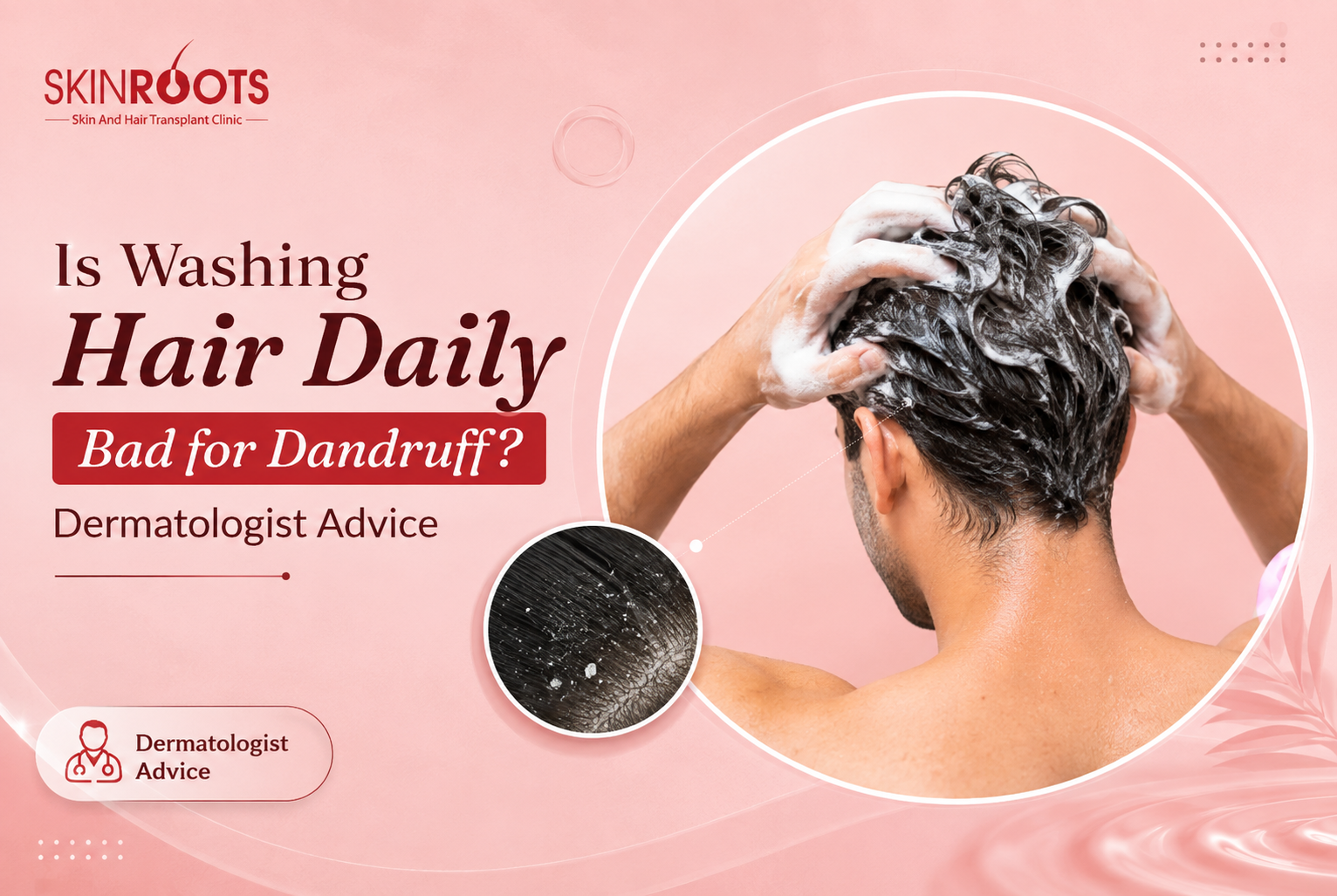
Have you ever brushed a flurry of white flakes off your dark shirt right before a big meeting? Yeah, we know how embarrassing that can be. Dandruff is stubborn, it is incredibly uncomfortable, and honestly, it can take a massive toll on your confidence.
If you are like many of the patients we see at Skinroots Clinic, you are probably exhausted from searching for a quick fix. One question seems to come up during almost every consultation:
"Should I be washing my hair every single day to scrub away these flakes, or is that just making things worse?"
The internet certainly does not help clear things up. Half the beauty advice out there tells you to wash daily. The other half claims daily washing will completely dry out your scalp and trigger an avalanche of new dandruff.
So, what is the actual story? Let’s dive into what is really happening on your head, why your scalp is reacting this way, and how to figure out the exact washing routine you need.
The Root of the Problem: What Actually Is Dandruff?
Before you start tweaking your shower routine, you need to know what you are actually fighting. A lot of people assume dandruff is just "dry skin." But more often than not, true dandruff comes from an overly oily scalp.
We all have a naturally occurring yeast on our scalps called Malassezia. Usually, this yeast is harmless on the natural oils (sebum) your hair follicles produce. But for some people, things get a little serious. When Malassezia eats that oil, it leaves behind an irritating byproduct called oleic acid.
If your skin sensitive to oleic acid? Your scalp panics and starts shedding skin cells way faster than normal. Those dead cells mix with your scalp oil, clumping together to form the visible white or yellowish flakes we all dread.
A Clinical Perspective on Daily Hair Washing
Knowing that oil feeds the problem, should you wash your hair every day? It is a tricky balance.
Why Washing Daily Can Help?
Since the yeast feeds on your scalp's oil, washing that oil away makes logical sense.
- You Starve the Yeast: Frequent washing removes the excess sebum, cutting off the food supply.
- Manual Removal: A good daily wash helps scrub away dead skin before it has a chance to clump into large flakes.
- Instant Relief: Medicated shampoos offer amazing, immediate relief from the intense itching.
Why Washing Daily Can Backfire?
But wait, over-washing can easily trap you in a vicious cycle.
- Stripping the Barrier: Harsh shampoos can completely strip your scalp of its natural moisture. If your issue is actually just a tight, dry scalp and not fungal dandruff, daily washing is going to hurt you, not help you.
- The Rebound Oil Slick: When you strip all the natural oil away, your body freaks out. It overcompensates by pumping out even more oil. What happens next? That new oil feeds the yeast all over again.
- Wrecked Hair: Washing every 24 hours with strong anti-dandruff formulas will leave your actual hair strands brittle, frizzy, and prone to snapping.
How Often Should You Wash?
The short answer is that it depends entirely on your specific scalp.
If you have a naturally greasy head and suffer from severe, chronic, and oily dandruff, washing daily or every other day with a gentle, targeted cleanser might be exactly what your skin needs to stay balanced.
But if your scalp feels tight, itchy, and the flakes fall like tiny, dry snow? Stop washing so much. You probably need the Best Treatment for Dandruff and Dry Scalp to lock moisture back into your skin barrier. That usually means reducing your wash days to just twice or three times a week.
Dermatologist-Approved Hair Care Routine
Stop guessing and try following these basic dermatological rules instead:
- Mix Up Your Bottles: Don't use a heavy medicated shampoo every single day. Alternate your targeted treatment with a gentle, hydrating, sulfate-free option.
- Target the Roots: Shampoo belongs on the scalp, not the ends. Massage it in gently with your fingertips. Never use your nails, as scratching can cause micro-tears and infections.
- Let the Medicine Sit: If you are using a medicated wash, it needs time to do its job. Don't just lather up and rinse it straight down the drain. Leave it sitting on your scalp for 3 to 5 minutes.
- Protect Your Ends: Anti-dandruff treatments are notoriously drying. Always use a good conditioner on your mid-lengths and ends, but keep it strictly off your scalp to avoid clogging your follicles.
When to Stop Guessing and See the Pros?
Sometimes, home remedies and over-the-counter products can’t make the dandruff go away. If you have adjusted your wash schedule and you are still aggressively scratching your head, it is time to seek professional care. Ignoring the problem indefinitely can lead to severe scalp inflammation and even temporary hair thinning.
That is where Skinroots Clinic steps in. As a dedicated dandruff treatment clinic, we know firsthand that over-the-counter fixes are a one-size-fits-all approach to a highly individualized medical issue.
The Skinroots Clinic Difference
We don't guess. When you come in for a consultation, we use advanced scalp analysis tools to figure out exactly what is causing your flaking. Is it an overactive fungus? Contact dermatitis from a bad hair product? Psoriasis?
Once we know the why, we offer the Best Dandruff Treatment in Delhi, built entirely around your specific biology.
-
Customized for you:
Men and women have different scalp needs. We provide tailored dandruff treatment for men that factors in things like thicker sebum production and male pattern hair loss. We also offer gentle, preserving dandruff treatment for women designed to heal the scalp while protecting your hair length and color.
-
Treatments You Can't Do at Home:
Our comprehensive scalp treatment for dandruff goes way beyond just handing you a bottle of shampoo. We utilize clinical-grade clarifying peels, deep hydration therapies, and targeted medical applications.
-
Real Medical Expertise:
By working directly with a Dandruff Treatment Dermatologist, you ensure you are treating the root medical condition rather than just putting a band-aid over the symptoms.
If you are totally exhausted by the endless cycle of flakes and itchiness, do yourself a favor. Invest in the best anti-dandruff treatment available and get your scalp health back on track.
The Bottom Line
Washing your hair daily is not inherently "bad," but it definitely is not a magic cure either. The secret to a healthy head of hair is knowing exactly what your unique scalp actually wants.
Don't let dandruff dictate your wardrobe or ruin your confidence. Reach out to Skinroots Clinic today, and let us help you build a routine that actually works.
Frequently Asked Questions (FAQs)
1. Will Oiling My Hair Overnight Cure the Flakes?
People love this home remedy, but it always backfires. Malassezia eats oil. Lathering heavy coconut or olive oil on your head is basically setting up an all-you-can-eat buffet for the fungus. Let a professional diagnose you before applying heavy oils.
2. Can Stress Actually Cause Dandruff?
Stress does not spontaneously create the yeast, but it does tank your immune system and cause your hormones to spike. Those hormonal changes make your scalp pump out more oil, setting the perfect stage for a massive flare-up.
3. Is Dandruff Contagious?
No, you cannot catch it from sharing a hat, a comb, or a pillowcase with a friend. The yeast that causes the issue already lives naturally on everyone's head.
4. How Fast Does a Professional Treatment Work?
A lot of our patients feel a huge sense of relief after just one or two sessions of a clinical scalp treatment for dandruff. For more chronic, severe cases, it is advisable to consult a dermatologist. At Skinroots Clinic, we map out a treatment plan spanning a few weeks to get you fully clear.
5. Does Hot Water Make Things Worse?
Yes, absolutely. Washing your hair with scalding hot water strips away all your essential moisture. This leads to severe dryness and that dreaded oil rebound. Always stick to lukewarm water to keep your scalp happy.
Have a skin or hair concern?
Reading about a concern is a useful first step. Speak with the Skinroots team to discuss your concern and available treatment options.
Book a ConsultationRelated articles