
When to Start Treatment for Crown Thinning Before Hair Loss Worsens
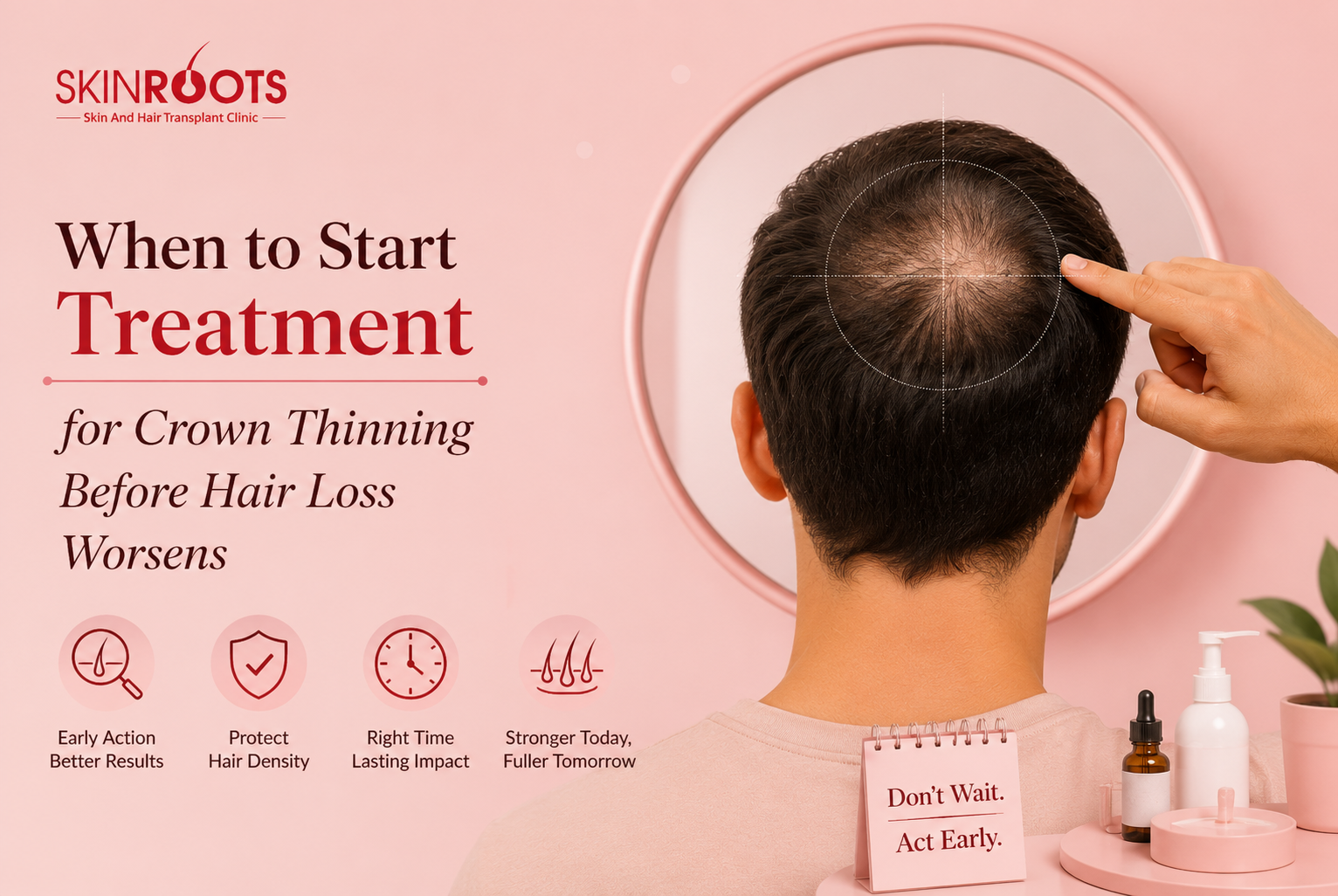
Hair loss doesn’t develop suddenly; it usually starts slowly, especially at the crown. What begins as mild crown thinning can progress to visible patches or even a bald spot on the crown if ignored.
The crown is one of the most common sites where hair loss occurs, yet treatments are delayed by most patients, by thinking “when the right time will come”.
The time to start treatment is important to avoid lasting damage and increase the likelihood of successful regrowth.
Understanding Crown Thinning
The crown, the top back portion of your scalp, has a natural spiral hair growth pattern. That is why early thinning at the crown becomes harder to be under the radar. But gradually, the scalp can appear more prominent over time, and the density of hair begins to drop.
Women and men are both afflicted by this:
- Male hair thinning at crown is usually associated with genetic hair loss (androgenetic alopecia).
- Hormonal imbalance, stress, and nutritional deficiency disorders may be the contributors to female hair thinning at crown.
Ignoring these subtle signals could trigger extensive crown baldness and can worsen if left unattended.
Early Signs You Should Not Ignore
Acknowledging the early signs of Crown Hair Loss and taking action before it goes downhill is pivotal to preventing the condition from becoming worse. Here’s what to watch for:
- Greater visible scalp area in bright light.
- Hair appears flatter or less voluminous at the crown.
- Excessive hair shedding during washing or brushing.
- A slowly expanding balding crown.
- Difficulty in styling hair to cover thinning areas.
Even one or two of these signs, if you catch them, is a sign that your hair needs attention.
When Is the Right Time to Start Treatment?
The short answer: get it as quickly as possible.
Hair loss is progressive, which means it gets worse over a period of time if it remains untreated. Here are the benefits of starting crown hair loss treatment early:
1. Prevents Further Hair Loss
Early treatment ensures that ongoing hair loss at the crown is slowed or avoided, preserving the hair that already exists.
2. Improves Chances of Regrowth
Active hair follicles respond more positively to treatment. Regrowth becomes difficult once follicles are dormant.
3. Avoids Permanent Baldness
More complex crown baldness can result in cosmetic surgery such as hair transplants, which can be prevented with timely treatment.
Why People Delay Treatment?
Misconceptions about treatment for crown thinning cause many to undergo the treatment:
- “It’s just temporary shedding.”
- “I’ll start treatment when things get worse.”
- “Hair loss is natural with age.”
While some hair fall is natural, regular hair thinning at the crown is not. This only hinders treatment options in the future.
Causes Behind Crown Hair Loss
Understanding the reason behind hair loss can help in choosing the Best Hair Loss Therapy.
1. Genetics
The most common cause is the genes, especially in men, that leads to balding crown patterns.
2. Hormonal Imbalance
Hormonal changes can cause female hair to thin at the crown, especially during PCOS, pregnancy, or menopause.
3. Stress and Lifestyle
Chronic stress interrupts the hair growth cycle, leading to crown thinning.
4. Nutritional Deficiencies
Absence of iron, protein, and key vitamins weakens hair roots.
5. Scalp Conditions
Dandruff, infections, or inflammation can also make hair loss at the crown worse.
Stages of Crown Thinning
Hair loss at the crown typically comes in stages:
- Mild thinning – Slight reduction in volume.
- Visible thinning – Scalp starts showing.
- Defined bald spot – Noticeable bald spot on crown.
- Advanced baldness – Significant crown baldness.
The faster you can intervene, the less difficult it is to reverse or better manage the condition.
Available Treatment Options
At Skinroots Clinic, treatments are tailored based on the stage and cause of your crown hair loss.
1. Medical Treatments
There are both topical and oral medications to slow down the Male Hair Thinning at Crown and promote regrowth.
2. PRP Therapy (Platelet-Rich Plasma)
This is a well-known non-surgical solution that reinforces hair follicles and encourages natural growth.
3. GFC (Growth Factor Concentrate)
Advanced therapy that speeds healing and increases hair density.
4. Mesotherapy
Injections with nutrients that target the underlying cause of hair thinning at crown.
5. Hair Transplant (Advanced Cases)
Transplant procedures restore hair permanently for severe crown baldness.
How Soon Can You See Results?
Hair treatments need patience. Typically:
- Reduced hair fall can be noticed within 4–6 weeks.
- Improvement in thickness usually takes 2–3 months.
- Significant regrowth may take 4–6 months.
Consistency for all Crown Hair Loss Treatment is very important
Tips to Support Treatment Results
Although professional management is necessary, lifestyle modifications can significantly improve effects:
- Maintain a balanced diet rich in protein and iron.
- Manage stress through exercise or meditation.
- Avoid excessive heat styling.
- Use mild, sulfate-free shampoos.
- Follow your dermatologist’s advice regularly.
Executing these tip can help in maintaining overall hair health and prevent further worsening of balding crown conditions.
Why Choose Skinroots Clinic?
Skinroots Clinic offers personalized care. Instead of a one-size-fits-all methodology, our professionals assess:
- Your scalp condition.
- Hair loss stage.
- Underlying causes.
This provides the best treatment plan for your crown thinning concerns.
Final Thoughts
If you see early signs of Hair Thinning at Crown, don’t wait for the scalp to turn into a bald spot on crown.
The earlier you start treatment, the better your chances of keeping and restoring your hair. Hair loss is manageable but only if taken care of in time.
FAQ's
1. Can Crown Thinning be Reversed?
Yes, early-stage crown thinning can often be reversed with appropriate crown hair loss treatment. However, Advanced crown baldness may require more intensive procedures.
2. Is Crown Hair Loss Permanent?
Not always. Crown hair loss, if treated early, can be managed and even improved. The risk of permanent loss increases with delayed treatment.
3. How Do I Know if my Crown Thinning is Serious?
If you notice increasing scalp visibility or a developing bald spot on crown, you should see a specialist.
4. Do Men and Women Experience Crown Thinning Differently?
Yes. Male hair thinning at crown is often genetic, whereas female hair thinning at crown is generally due to hormonal or lifestyle factors.
5. How Long Does Treatment Take to Show Results?
Most treatments show some initial improvement within a few weeks, but full effects on hair loss at the crown can take several months.
6. Can Home Remedies Treat Crown Thinning?
Home remedies may support hair health, but are usually not enough to treat significant balding crown issues. Professional treatment is recommended.
7. Is PRP Effective for Crown Hair Loss?
Yes, PRP is very effective in improving hair density and slowing down crown hair loss, particularly in the early stages.
Have a skin or hair concern?
Reading about a concern is a useful first step. Speak with the Skinroots team to discuss your concern and available treatment options.
Book a ConsultationRelated articles