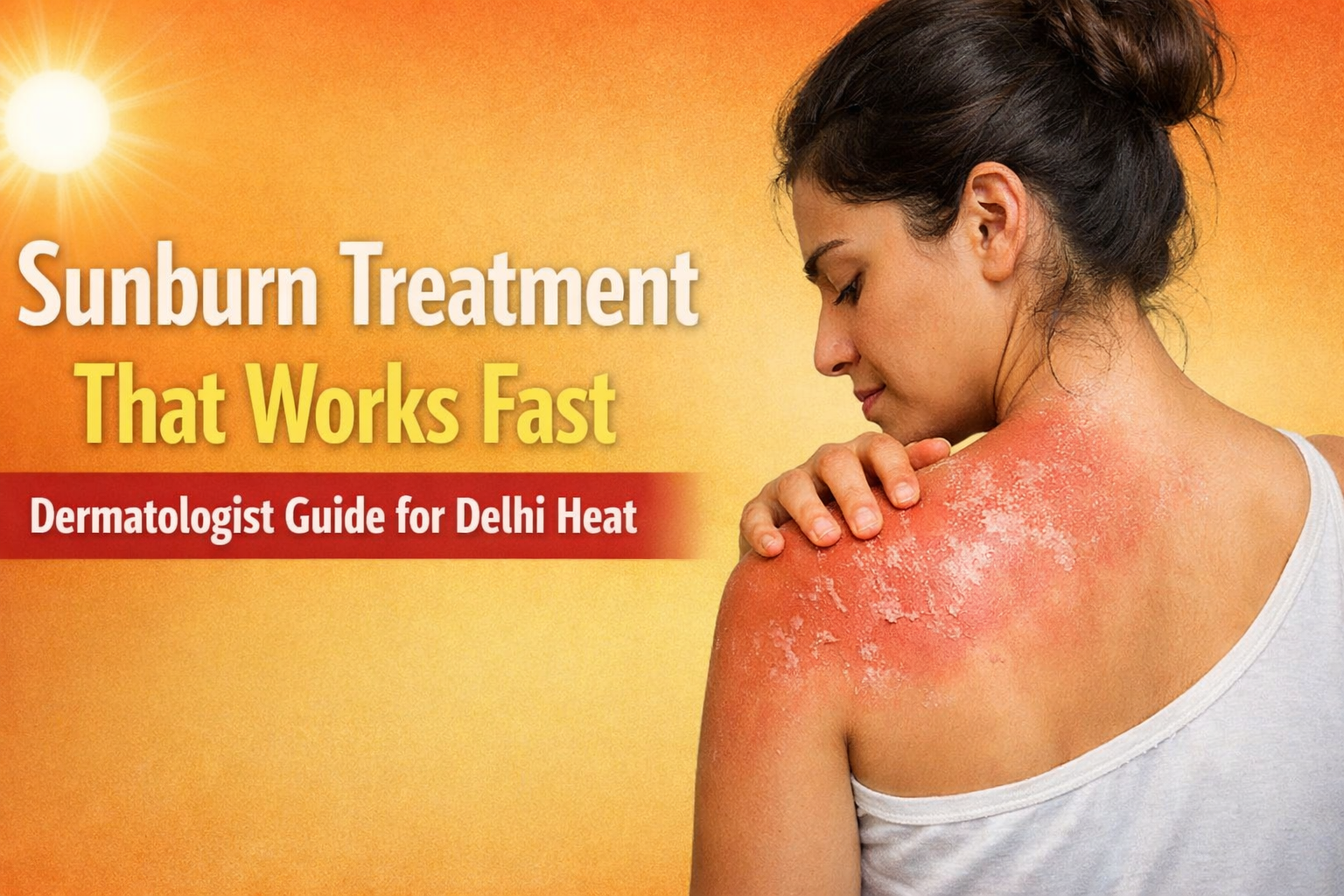
Delhi summers can be brutal. One afternoon under the harsh sun is enough to leave your skin red, irritated, painful, and extremely sensitive. Whether it happens after a long commute, a vacation, or simply spending too much time outdoors, sunburn is more than just temporary redness; it is actual skin damage caused by harmful UV rays. If your skin feels hot, tight, itchy, or starts peeling after sun exposure, it’s important to treat it early before the damage worsens. At SkinRoots Clinic, our dermatologists often see patients struggling with severe tanning, redness, burning sensations, and uneven skin texture during the peak summer months.
This guide will help you understand how sunburn treatment in Delhi heals your skin quickly and safely.
What Exactly Happens During Sunburn?
When you go out under the intense sun, your skin becomes exposed to the ultraviolet radiation. Such a high level of contact under the sunlight damages the outer layer of the skin, resulting in redness, pain, swelling, and irritation.
In simpler words, it is the way the skin reacts to excessive sun exposure. The chances of sunburn increase during the daytime. Some common signs of sunburn include:
-
Red or pink skin
-
Burning or tingling sensation
-
Pain or tenderness
-
Peeling and dryness
-
Swelling in certain areas
-
Rashes or tiny bumps
-
Itching or irritation
-
Skin becomes warm
Though sun exposure for a longer time can affect everyone,but people with sensitive skin are more prone to sunburn.
How to Treat Sunburn Fast at Home
When the sunburn is mild, you can follow the steps below at home to provide calmness to the skin:
1. Cool the Skin Immediately
To reduce the heat and inflammation, either take a cold shower or apply a cool compress. But be careful, don’t apply the ice directly to the skin as it can worsen the irritation.
2. Keep Your Skin Hydrated
Sunburn wipes out the moisture from the skin, which leads to dryness and flakiness. Always use moisture with ingredients like aloe vera, ceramides, or hyaluronic acid.
3. Avoid Scrubbing or Peeling Skin
When the skin starts to heal, peeling occurs naturally, but many people try to remove it forcefully, that worsen the irritation and deepens the pigmentation. Avoid scrubbing or peeling the skin.
4. Stay Away from Harsh Products
Refrain from skin products that have retinol, exfoliants, strong acids, and alcohol until the sunburn heals completely. Instead, use a gentle cleanser and calming products.
Following such small steps at home can provide fast sunburn relief.
When Home Remedies Are Not Enough
When the sunburn brings pain, swelling, blisters, tanning, and persistent redness, that is the time when you require the dermatologist sunburn treatment as the untreated inflammation can also lead to:
-
Early Aging
-
Long-term pigmentation
-
Uneven skin tone
-
Sensitive skin
-
Sun spot
-
Barrier damage
Professional Sunburn Treatments That Actually Help
At Skinroots clinic, we provide the best sunburn treatment depending on how deeply your skin is affected:
Medicated Healing Creams
During the intense sunburn, we recommend some medicated healing creams to lessen the inflammation, itching, redness, and dryness. Such a dermatologist-recommended cream also speeds up skin recovery.
Hydration Therapy
Another medical treatment for sunburn is hydration therapy that targets the skin barriers and lessens the dryness caused by the UV rays.
Anti-Pigmentation Care
Sometimes sunburn leaves dark patches or tanning, in such case dermatologist suggests brightening treatment that improves the overall texture and complexion of the skin.
Soothing Clinical Facials
Special calming facials designed for sensitive and inflamed skin can help restore skin comfort safely.
Barrier Repair Treatments
These treatments focus on rebuilding damaged skin and improving overall texture.
For patients searching for medical treatment for sunburn, professional dermatological care is often the safest and fastest option.
Common Mistakes People Make After Sunburn
There are certain habits that you should avoid after encountering sunburn, as these can worsen the skin condition further.
-
Using toothpaste or lemon directly on the skin.
-
Applying extreme scrubs to remove tanning.
-
Overlooking sunscreen once the sunburn heals.
-
Scratching the peeling skin.
-
Taking a bath in hot water.
-
Going out under the sun without shielding the skin.
Once the skin is damaged, it needs gentle care and proper protection.
Choosing the Right Skin Specialist Matters
Not every skin irritation is a simple sunburn. Sometimes conditions like photosensitivity, allergic reactions, fungal infections, or heat rashes may look similar. That’s why consulting a qualified expert becomes important if symptoms continue.
If you are searching for a reliable skin specialist for sunburn, always choose a clinic that focuses on personalised skin analysis instead of temporary, quick fixes.
At SkinRoots Clinic, patients receive detailed skin assessments and customised recovery plans designed according to their skin type and level of damage.
Final Thoughts
Sunburn may seem temporary, but repeated UV damage can seriously affect your skin health over time. Early care, hydration, and professional guidance can help your skin recover faster and prevent long-term pigmentation or sensitivity.
If you have been wondering how to treat sunburn fast, the key is to act early, avoid harsh remedies, and seek expert help when needed.
For people looking for the best sunburn treatment under expert care, consulting the Best dermatologist in Delhi can make all the difference in restoring healthy, calm, and protected skin again.
FAQs
1. When should I see a dermatologist for sunburn?
If your skin feels very painful, starts peeling badly, or the redness stays for days, it’s better to consult a dermatologist. Sometimes, sunburn can turn into stubborn tanning or pigmentation if ignored.
2. Does SkinRoots Clinic treat sunburn and tanning?
Yes, SkinRoots Clinic offers treatments that help soothe burnt skin, reduce tanning, and restore your natural glow. The treatment is usually suggested based on your skin type and sun damage.
3. What helps sunburn heal faster?
Keeping the skin cool, staying hydrated, and using gentle moisturizers can help a lot. Avoid harsh products and direct sunlight while your skin is recovering.
4. Can sunburn leave permanent marks on the skin?
In some cases, yes. Repeated sun exposure can lead to dark patches or uneven skin tone, especially in the Delhi heat. Early treatment usually helps prevent long-term damage.
5. How long does sunburn usually take to recover?
Mild sunburn may settle within a few days, while deeper tanning or peeling can take longer. Proper care and a dermatologist's guidance can speed up the healing process.